
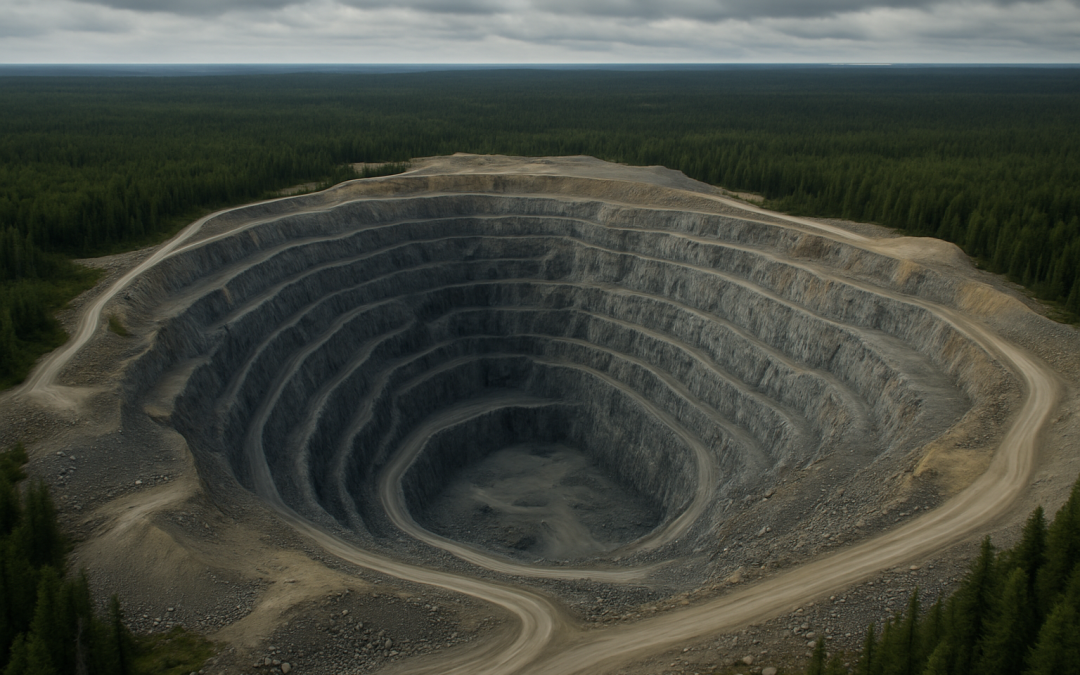
In the camps and offices strung across Northern Ontario’s gold country — from Timmins to Red Lake to the shores of Lake Superior — the gold price isn’t just a number on a screen. It’s the difference between a mine that runs three shifts and one that starts counting jobs. So when spot gold slipped below the $5,000-an-ounce mark this week for the first time in a month, people here noticed.
The dip comes on the back of renewed concerns that conflict-driven inflation could push the U.S. Federal Reserve to hold off on the rate cuts markets had been banking on. For Northern Ontario’s gold producers, who have spent the past year riding one of the most remarkable price runs in the metal’s history, this is a reminder that nothing climbs in a straight line. A pullback from record territory isn’t a crisis — but it is a signal worth watching closely, particularly for junior explorers and development-stage projects where financing decisions hinge on where gold settles over the coming months.
The fundamentals that drove gold to historic highs in 2026 haven’t vanished. Geopolitical uncertainty, central bank buying, and the enduring appeal of gold as a store of value remain firmly in place. But in a region where a single percentage-point shift in the gold price can ripple through supply chains, payrolls, and municipal tax bases, the conversation at the diner counter tends to cut through the noise fast. Northern Ontario has seen boom and bust before. Right now, this looks like a pause — not a retreat.