
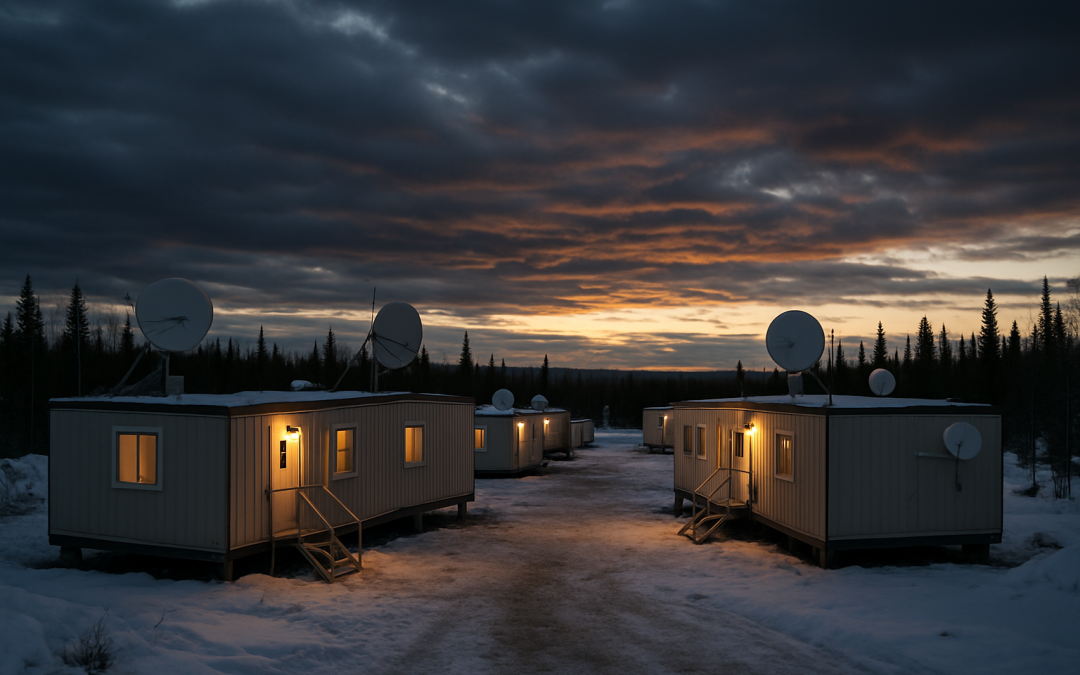
Out in the bush, distance has always been the hidden cost of doing business. For the remote mine camps scattered across Northern Ontario’s vast hinterland — places where the nearest town might be a float plane ride away — staying reliably connected to head offices, cloud systems, and the outside world has historically meant paying a steep premium, or making do with something far less than reliable.
That calculus is starting to change. According to Interface, a connectivity solutions provider featured in a recent Northern Miner video, SpaceX’s Starlink low-earth orbit satellite network is driving down the cost of remote mine camp connectivity in a meaningful way — while simultaneously delivering the kind of reliable, high-speed links that modern mining operations increasingly depend on. From real-time data sharing to voice communications and cloud-based operational systems, the gap between a remote drill site and a downtown Toronto boardroom is narrowing faster than many in the industry expected.
For a region like Northern Ontario, where the promise of developments like the Ring of Fire has always been tangled up with the brutal logistics of remoteness, this is more than a technology story. It’s a story about whether the economics of going remote can finally work in the North’s favour — and whether the communities and companies betting on that future will have the tools they need to get there. Click here to read the full story.