
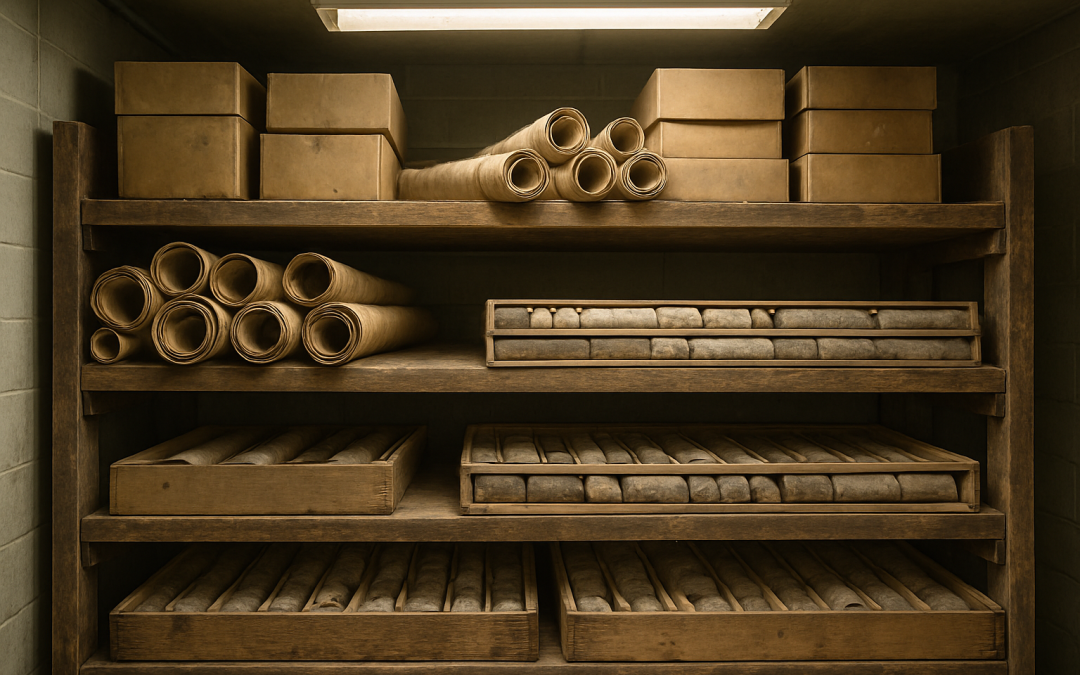
Somewhere in Northern Ontario, tucked in the back of a mining company office or stacked floor to ceiling in a forgotten warehouse, sits the geological story of a discovery that hasn’t happened yet. Decades of drill logs, assay results, and hand-drawn maps — some of it going back generations — have been quietly gathering dust while the industry spent billions searching for what might already be documented and catalogued, waiting to be found again. That’s the problem Orix Geoscience has set out to solve, and in a region where the next major mine could mean everything to a struggling community, the stakes couldn’t be higher.
Orix is working to digitize, organize, and make sense of the enormous volumes of historical geological data that the exploration and mining industry has accumulated over more than a century of work across the Canadian Shield. In Northern Ontario, where the ground beneath our feet has been poked, sampled, and mapped by prospectors and geologists going back to the silver rush days of Cobalt, that accumulated knowledge is immense — and largely inaccessible. By applying modern data science and AI-assisted tools to these legacy records, Orix is essentially giving the industry a second look at ground it thought it already understood, and the early results suggest there’s more to find than anyone realized.
For the communities that depend on mining — from Timmins to Thunder Bay, from Red Lake to the communities surrounding the Ring of Fire — this kind of work isn’t abstract. It’s the difference between a junior explorer walking away from a prospect because the upfront cost of new drilling is prohibitive, and that same company finding enough signal in existing data to justify putting boots on the ground. In a 2026 exploration environment shaped by tighter capital markets and rising costs, unlocking value from what already exists may be one of the smartest plays in the business. Click here to read the full story.