
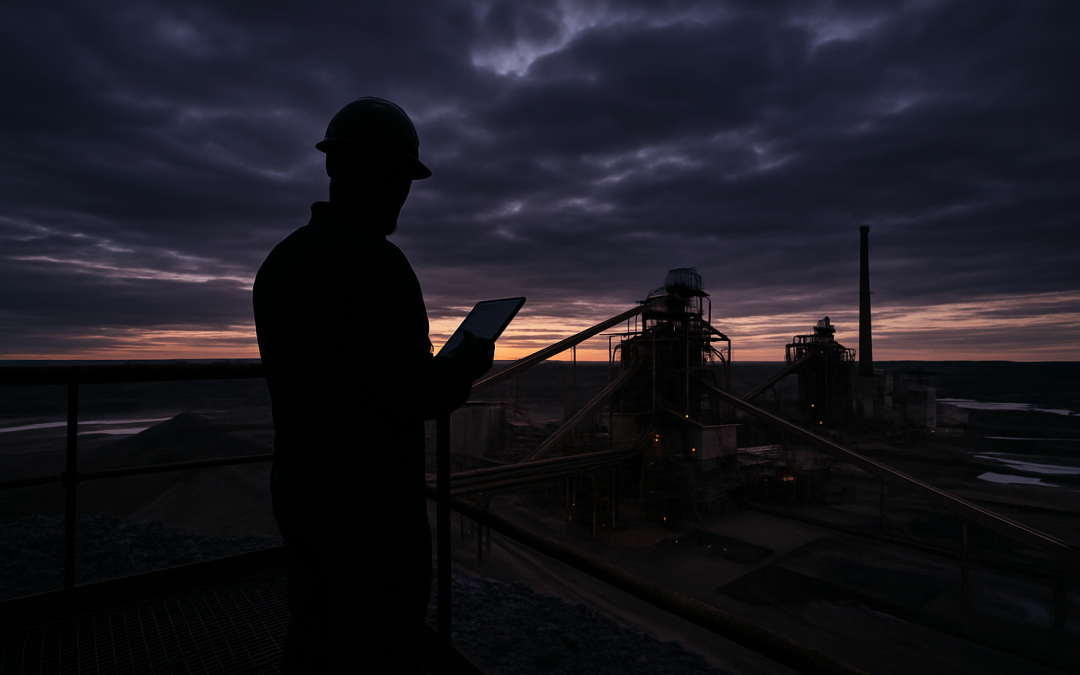
The race for critical minerals isn’t just being run in the ground anymore — it’s being run in data centres, on servers, by machines that can solve in days what used to take research teams months. A U.S. Department of Energy team has developed AI agents capable of designing and optimizing critical minerals recovery methods from industrial waste at a pace that would have seemed like science fiction just a few years ago. That’s not a small thing. That’s a fundamental shift in how the world is going to find, recover, and process the minerals that power the modern economy.
For Northern Ontario, where communities from Timmins to Sudbury to the edge of the Ring of Fire have staked so much of their future on critical minerals — cobalt, nickel, lithium, rare earths — this kind of technological leap lands with real weight. The region sits on some of the most significant mineral endowments on the continent, but it also faces the hard reality of competing in a global race where speed, efficiency, and innovation increasingly determine who wins the contracts, the investment, and the jobs. If AI can compress the timeline on recovery methods this dramatically, the operations and communities that embrace it earliest will hold a serious advantage.
This isn’t about robots replacing miners. It’s about a technological tide that’s already rising, and the question for Northern Ontario is whether the region’s companies, researchers, and governments are positioned to ride it — or get left behind watching others do what could have been done here. The expertise exists in this region. The minerals are here. What’s needed now is the will to lean into what’s coming.