
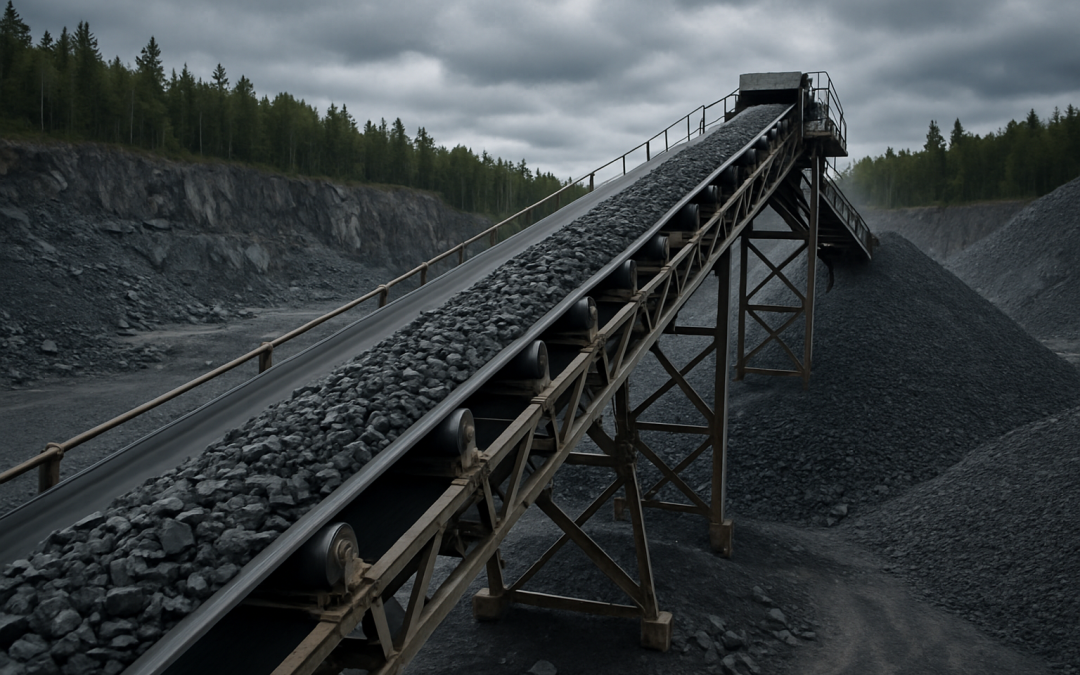
In a small town on the north shore of Lake Huron, a quarry operator is quietly rewriting the way it moves rock — and in doing so, telling a story about where extractive industry is heading. The trap rock quarry outside Bruce Mines, a community whose mining roots stretch back to Canada’s first copper mine in the 1840s, is swapping out its diesel-burning haul trucks for a conveyor system, a shift that speaks to both the economics of modern quarrying and the growing pressure on operations of every size to do more with less.
It may not carry the drama of a billion-dollar Ring of Fire announcement, but this kind of ground-level operational decision is where the real transformation of Northern Ontario’s mining and resource sector happens. Conveyors mean lower fuel costs, reduced equipment wear, fewer moving parts to maintain in brutal northern conditions, and a smaller emissions footprint. For a quarry supplying trap rock — the dense, durable aggregate used in everything from road construction to rail ballast — the math on long-term cost savings is hard to argue with. In 2026, with input costs still elevated and margins tighter than anyone would like, that math matters.
Bruce Mines may be a small dot on the Trans-Canada, but decisions like this one ripple outward. They signal that even legacy operations in the region are adapting, investing, and finding ways to stay competitive. That’s not a small thing in a part of Ontario that has learned, sometimes painfully, what happens when the industry stops evolving. Click here to read the full story.