
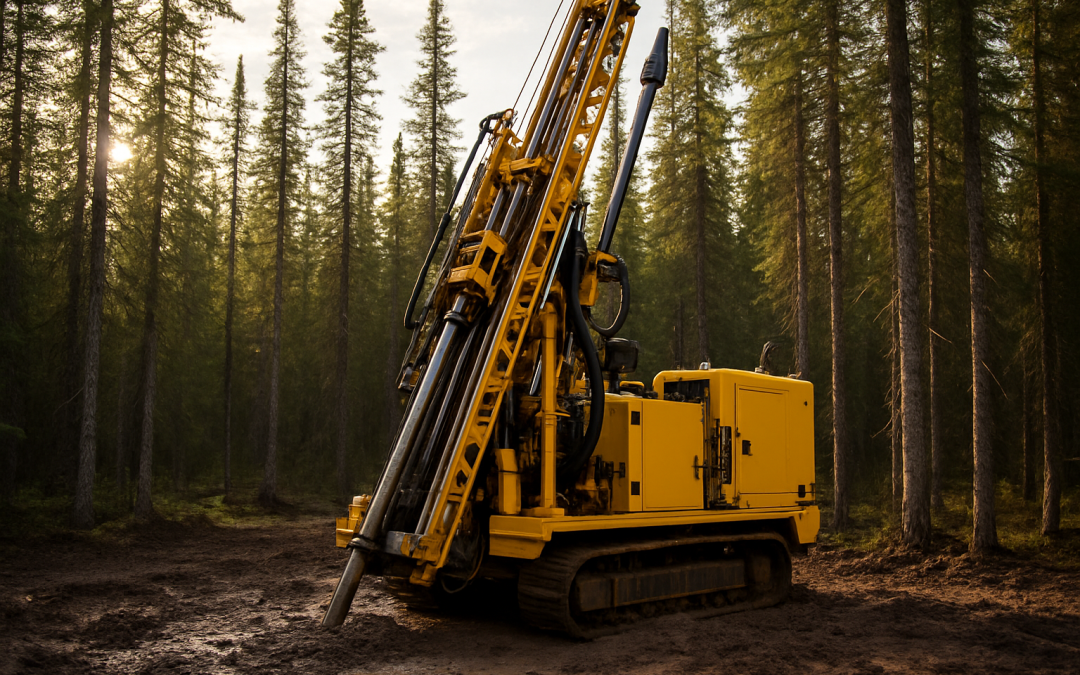
There is nothing romantic about rod handling at forty below. It is heavy, repetitive, unforgiving work — and for decades, it has been the backbone of every drill program that has ever put a new mine on the map in Northern Ontario. But the people who do that work are harder to find than they used to be, and the industry is starting to reckon with the physical toll it takes on the ones who still show up.
Exploration drilling remains the first chapter in every mine’s story, but in 2026 that chapter is being rewritten under serious pressure. Programs are pushing deeper, skilled drillers are retiring faster than they can be replaced, and safety regulators are taking a harder look at the risks that come with manual rod handling and live-hole work. The answer, increasingly, is automation — not as a futuristic concept, but as practical equipment showing up on drill sites right now. For a region like Northern Ontario, where the next generation of critical mineral discoveries depends on aggressive, sustained exploration, this shift matters enormously. Faster, safer drilling means more ground covered, more targets tested, and ultimately more mines built.
The Northern Miner’s recent Q&A pulls back the curtain on how drilling contractors and junior explorers are navigating this transition together — balancing capital costs against safety obligations and the stubborn reality of a tight labour market. It is a conversation that resonates deeply across the Shield, where every drill turn is a bet on the future. Click here to read the full story.