
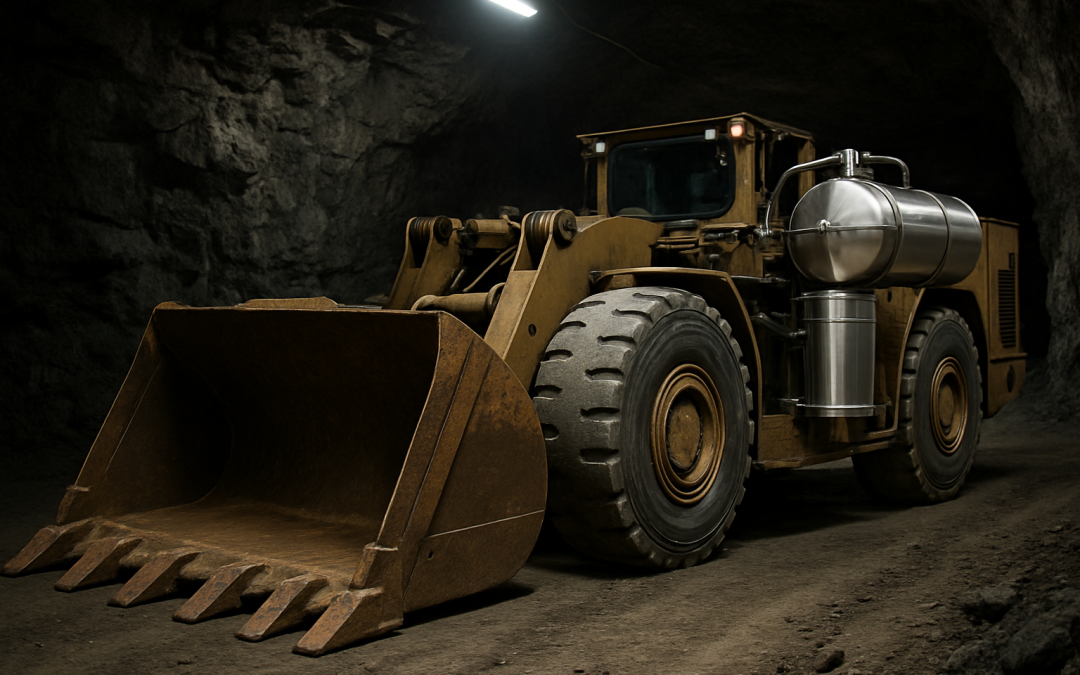
Deep underground, where the air is already thin and the rock closes in from every side, diesel exhaust has long been one of those quiet, grinding hazards that miners simply learned to live with. That calculus is changing fast. As regulators tighten exposure limits and Northern Ontario’s mines push ever deeper in pursuit of gold, nickel, and copper, the quality of air circulating through those tunnels has become as much a compliance issue as a safety one — and operators who haven’t yet addressed it are running out of time.
The conversation around diesel particulate matter in underground mines isn’t new, but the urgency is sharper in 2026 than it’s ever been. Tighter provincial and federal standards are forcing hard conversations in boardrooms and at the mine face alike. What’s emerging as a practical middle ground for many operations is retrofitting existing heavy equipment — the massive loaders and haul trucks that would cost a fortune to replace outright — with emissions control technology that can bring aging iron into compliance without blowing up a capital budget. That’s the real-world proposition being explored in this week’s interview in The Northern Miner, where Mammoth Equipment & Exhausts makes the case that a retrofit strategy can be both cost-effective and genuinely transformative for air quality underground.
For Northern Ontario’s mining communities, this isn’t an abstract regulatory debate. It’s about the men and women running equipment on the 30 or 40 level, breathing that air every shift. It’s about mines staying productive, staying compliant, and staying open. Solutions that let operations adapt without grinding to a halt are the kind of practical innovation this region has always needed — and always found. Click here to read the full story.