
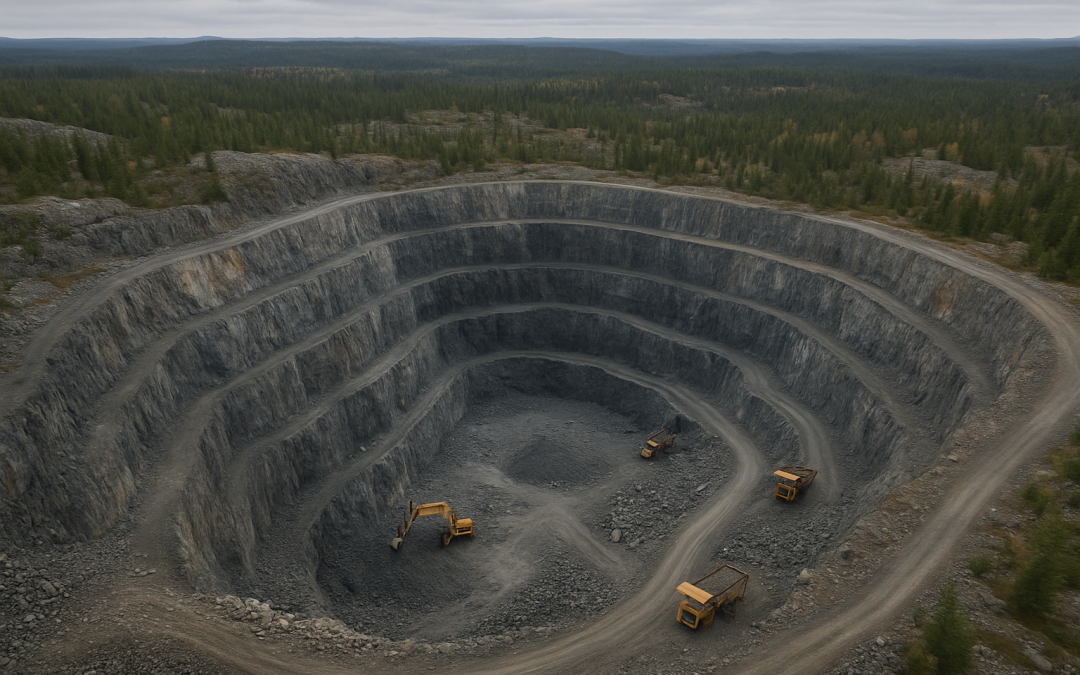
There’s a reason the world’s most powerful economy is putting real money on the table — and the ground beneath Northern Ontario’s boreal forest is part of that reason. The United States has announced a $250 million commitment to a new $1 trillion mineral security consortium, a sweeping international investment vehicle designed to lock down critical mineral and energy supply chains against an increasingly volatile geopolitical landscape. For anyone who has been watching the slow, grinding effort to unlock the Ring of Fire or move a junior explorer from discovery to production in this region, this is not an abstraction. This is the world catching up to what the North already knows.
Washington’s move signals something that Northern Ontario communities and mining advocates have been pressing governments to understand for years: critical minerals are not a niche concern, they are the defining economic battleground of this era. Nickel, cobalt, copper, lithium — the building blocks of batteries, defence systems, and the green energy transition — are embedded in this region’s ancient rock in quantities that matter on a global scale. When the Americans commit a quarter of a billion dollars to securing supply, they are, in effect, placing a bet on places like Sudbury, Timmins, and the still-underdeveloped deposits stretching toward James Bay.
For Northern Ontario, the question in 2026 is no longer whether the world wants what lies beneath this land. That question has been answered. The harder question — the one that shapes livelihoods and community futures — is whether the roads, the permitting frameworks, the Indigenous partnership agreements, and the political will can move fast enough to meet the moment. History has a habit of rewarding the prepared. Click here to read the full story.