
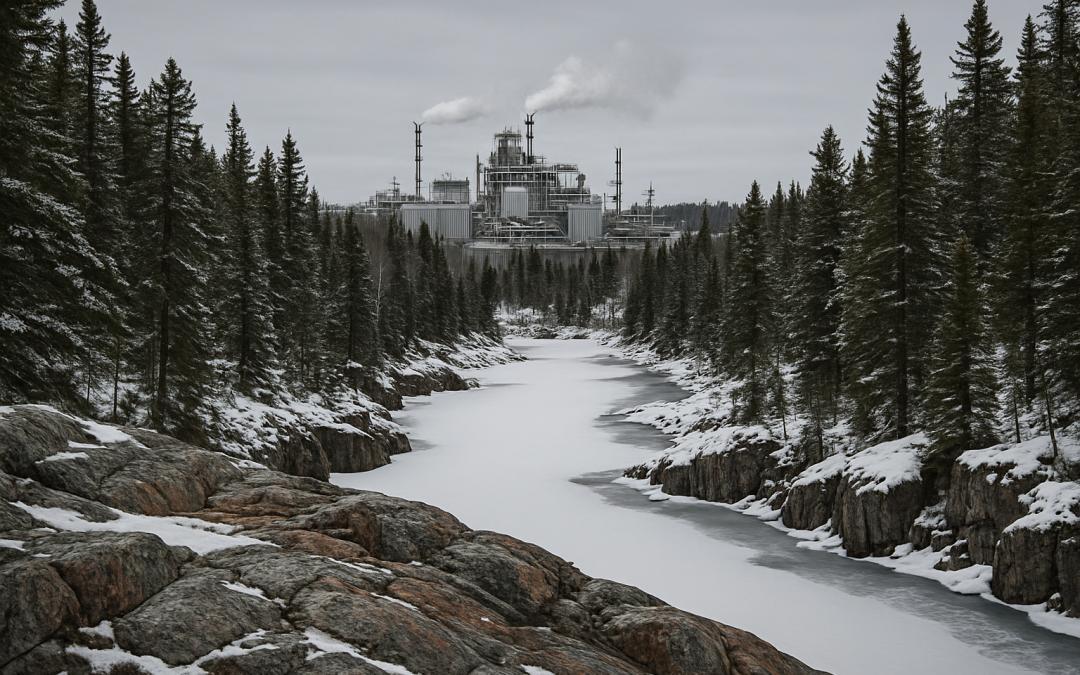
There’s a particular kind of quiet that sits over small Northern Ontario communities — the kind that comes from watching promise arrive and leave again, generation after generation. Red Rock, a township on the north shore of Lake Superior that has seen its share of industrial chapters open and close, may be standing at the edge of something genuinely different. BMI Group has committed $200 million to develop a refinery site there, and in a region where that kind of capital is rare and consequential, the announcement carries real weight.
The investment speaks to a shift that’s been building across the North — the recognition that Northern Ontario shouldn’t just be the place where raw materials are pulled from the ground and shipped elsewhere to be transformed into value. A refinery in Red Rock means jobs that go beyond the extraction phase, it means supply chain depth, and it means the kind of economic anchor that a community can build around for decades. For the Thunder Bay district and the broader region, this is the type of downstream processing investment that mining advocates have long argued the North deserves.
In 2026, with critical mineral supply chains under intense scrutiny from governments in Ottawa, Washington, and Brussels, the timing of BMI Group’s move is not accidental. The global scramble for processing capacity is real, and Northern Ontario — with its geology, its infrastructure corridors, and its workforce — is positioned to compete for that future. Whether Red Rock becomes a lasting node in that supply chain depends on execution, on partnerships with Indigenous communities, and on the policy support that turns a $200 million announcement into a generational asset. The North has heard big numbers before. This one deserves to be watched closely.