
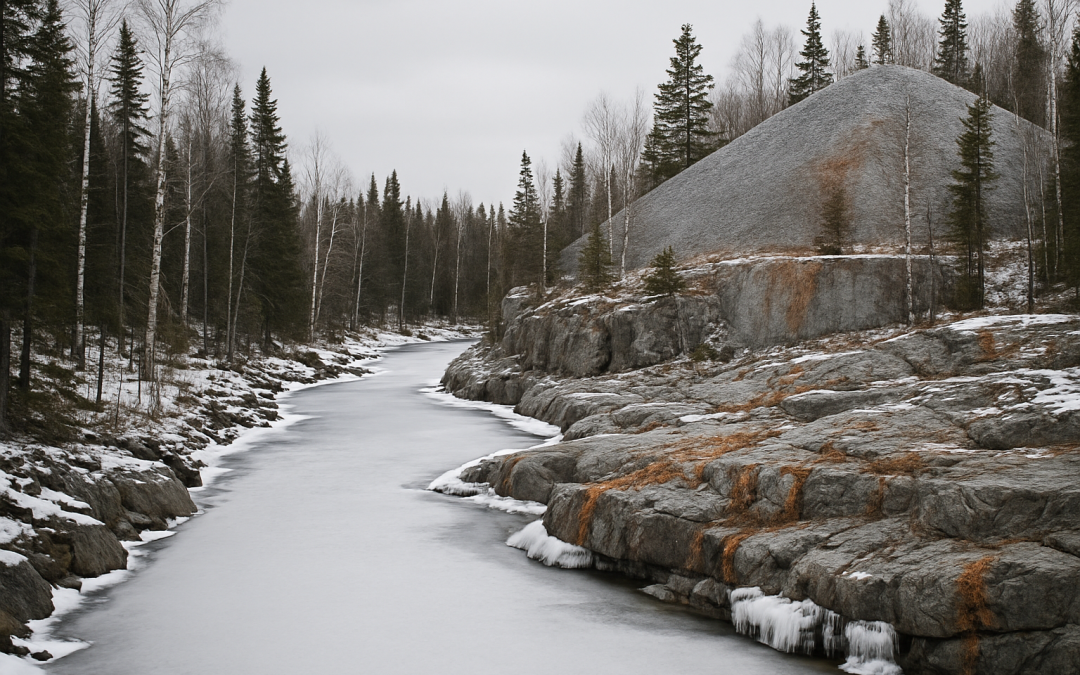
Somewhere beneath the tailings piles and waste rock that dot the Northern Ontario landscape lies a second chance — billions of dollars in critical minerals left behind by the extraction methods of another era. For the communities that have long staked their futures on mining, the question has never been whether those resources matter, but whether we’d ever find a smarter way to get at them.
Now, researchers in Northern Ontario are answering that question with something most people wouldn’t expect: bacteria. Using bioleaching technology — a process that harnesses microorganisms to break down rock and liberate the metals locked inside — scientists are exploring how mine waste sites could become viable sources of critical minerals like cobalt, nickel, and lithium. It’s the kind of innovation that doesn’t just change how we mine; it changes how we think about what mining leaves behind. In a region where the scars of the industry are as visible as its rewards, turning waste into wealth carries a significance that goes well beyond the economics.
In 2026, with critical mineral supply chains under intense global pressure and Northern Ontario sitting atop some of the world’s most significant deposits, the timing couldn’t be more pointed. This isn’t a laboratory curiosity — it’s a signal of where the industry is heading, and Northern Ontario researchers are helping lead the way. The North has always known how to extract value from difficult ground. It turns out, that instinct extends to the microscopic world too.