
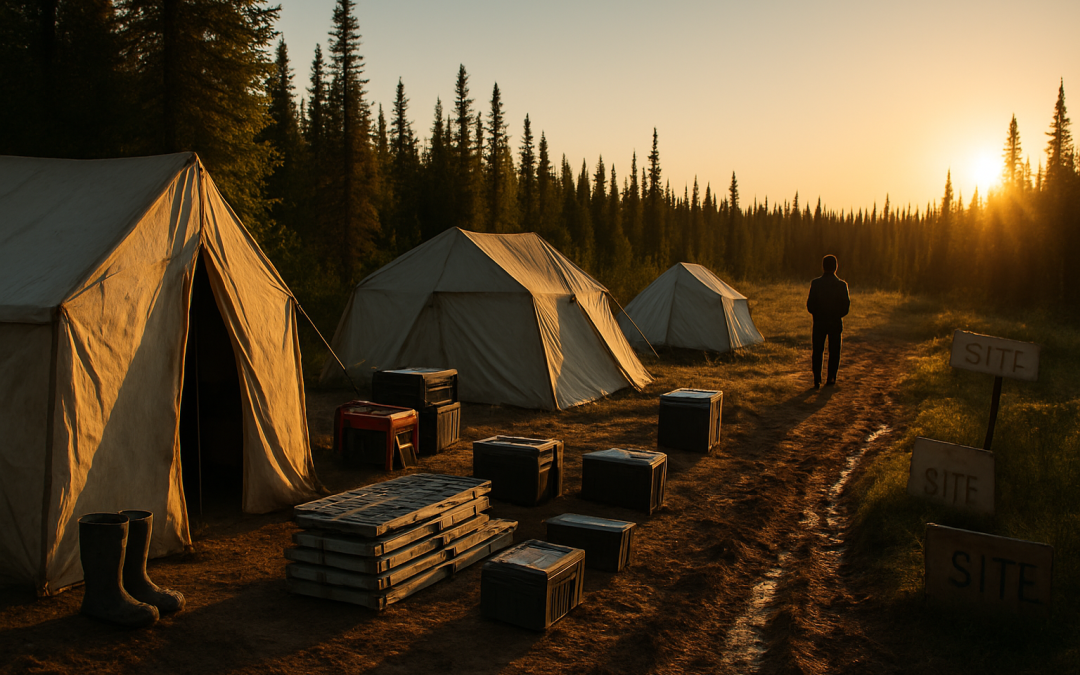
There’s a particular kind of frustration that runs deep in mining country — the kind that comes from knowing the ore is in the ground, the demand is real, and the capital exists, but the mine never gets built. Seabridge Gold’s KSM project in British Columbia’s Golden Triangle is a textbook case: a world-class deposit that has cleared both provincial and federal environmental reviews and still can’t seem to cross the finish line. It’s a story that resonates far beyond the Golden Triangle.
For anyone watching the Ring of Fire from Northern Ontario, KSM isn’t just a BC problem — it’s a mirror. The same permitting timelines, the same jurisdictional complexity, the same gap between discovery and production that has defined Canadian mining for a generation. At a moment when critical minerals are being treated as a matter of national security, and when Canada’s allies are actively courting our resources, the inability to move shovels into the ground is more than an inconvenience — it’s a competitive liability. The North knows this better than anyone. Communities from Timmins to Thunder Bay have watched promising projects stall while other countries streamline approvals and capture investment.
The KSM story should be required reading for every policy-maker involved in Canada’s critical minerals strategy. Not because the answer is to abandon environmental rigour or Indigenous consultation — it isn’t — but because the current system is producing outcomes that serve no one well. If Canada is serious about being a global mining leader in 2026, the gap between ambition and execution needs to close, and it needs to close now. Click here to read the full story.